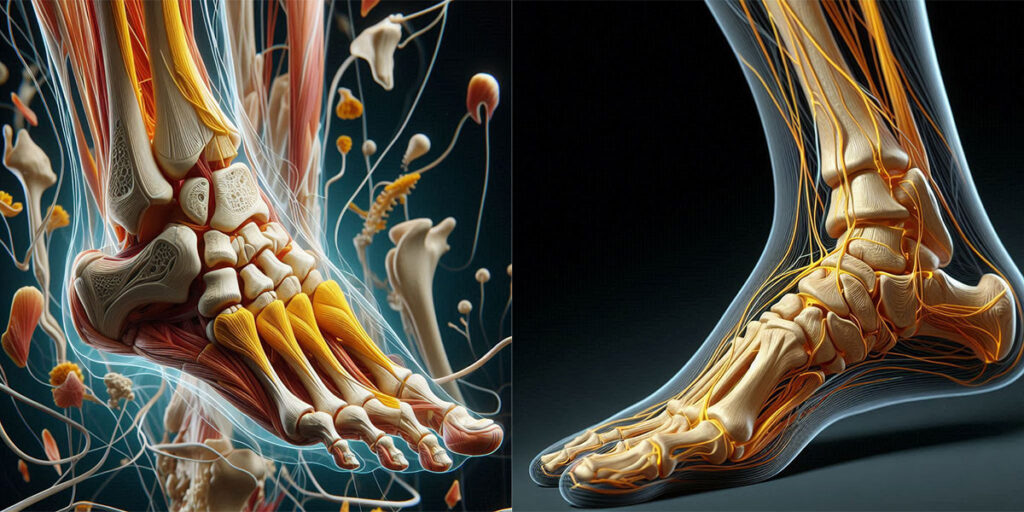


Foot
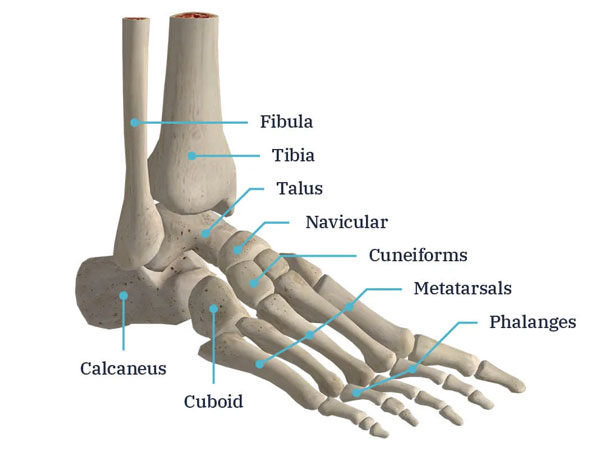
The seven tarsal bones form the ankle: the talus, calcaneus, navicular, cuboid, and three cuneiform bones.
The talus is an irregular, short bone located beneath the tibia. Its superior surface, called the trochlea, articulates with the tibia and fibula to form the ankle joint.
The calcaneus is the largest tarsal bone, positioned below the talus and posterior to the other tarsal bones. Anteriorly, it articulates with the cuboid bone. A projection on its medial surface supports the talus. This bone plays a crucial role in weight-bearing.
The bones of the foot are long bones and articulate with the tarsal bones and the proximal phalanges of the toes.
Among these bones, hallux valgus is a common condition, caused by abnormal bony growth on the medial side of the first metatarsal. It occurs more frequently in women due to wearing pointed or high-heeled shoes. This condition leads to pain, swelling of the big toe, and difficulty walking. Various surgical techniques are available to correct this deformity.
The toes consist of fourteen phalanges; except for the big toe, each toe has three phalanges. The bones of the foot are long bones that articulate with the tarsal bones and the proximal phalanges.
آناتومی پا آناتومی مچ پا
Treatment for Toe Fractures:
They are immobilized using finger splints or buddy taping (binding the toes together).
The medial malleolus (of the tibia) and lateral malleolus (of the fibula) play a role in forming the ankle joint.
For fractures of the lateral malleolus, no specific treatment is usually required; casting for three weeks can help reduce pain.
For fractures of the medial malleolus, treatment involves closed reduction and casting. If proper fracture alignment cannot be achieved with reduction, a screw is placed in the medial malleolus.
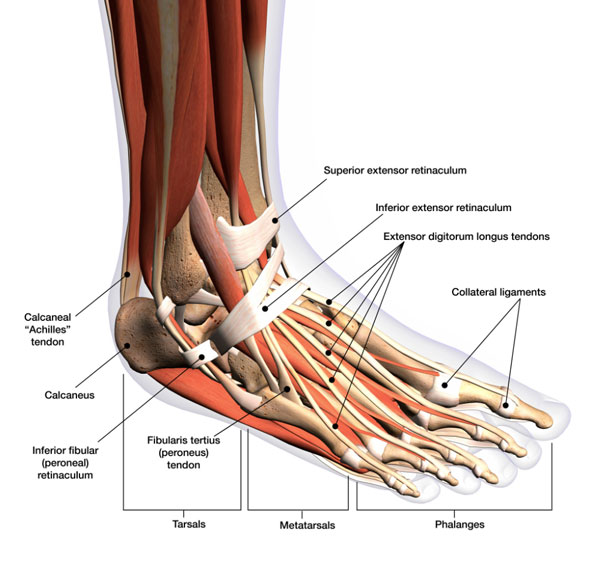
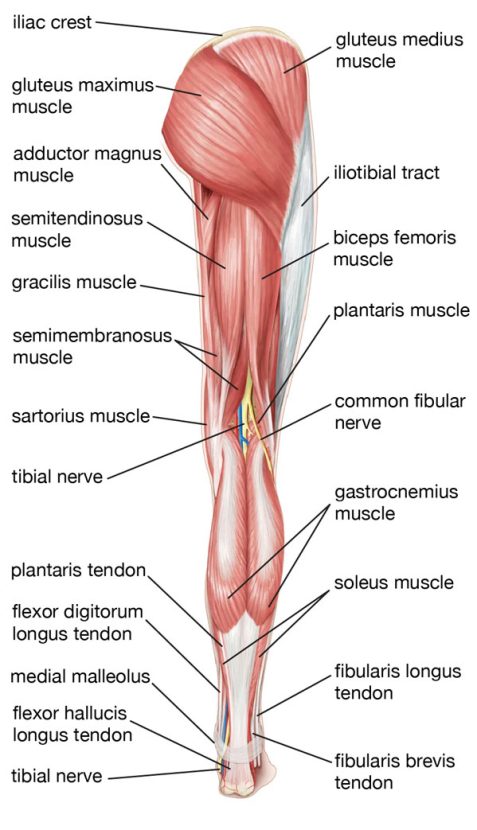
The Achilles tendon, a strong and flexible band that connects muscle to bone in the ankle, is the thickest and strongest tendon in this region.
Rupture (complete or partial) of the Achilles tendon is common, usually resulting from trauma, intense physical activity, or sudden, unprepared running.
Treatment of an Achilles tendon rupture is surgical and should be performed as soon as possible.
Navicular Bone (Scaphoid of the Foot)
The navicular bone is one of the seven tarsal bones, located in the central and anterior part of the ankle. This small, boat-shaped bone plays a key role in ankle movement and stability.
The navicular articulates anteriorly with the cuneiform bones and posteriorly with the talus. It also has contact with the cuboid bone. Its multiple articular surfaces allow complex ankle movements, including dorsiflexion, plantarflexion, inversion, and eversion.
Important muscle tendons, including the flexor digitorum longus tendon, pass over the navicular. These tendons assist in toe flexion.
Injury to the navicular bone, also referred to as navicular disease, can cause significant disability.
Common causes of navicular disease include repetitive trauma, overuse, and structural abnormalities. Symptoms include pain, limping, swelling, and stiffness of the ankle.
Treatment varies depending on the severity of the injury and may include rest, medication, physiotherapy, and, in severe cases, surgery.