


Elbow and Forearm
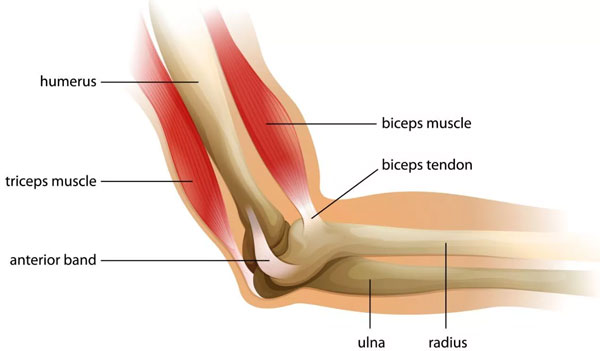
In the elbow region, we have three bones. In fact, the bones of the upper limb from the shoulder to the wrist consist of three long bones — one long bone in the arm and two long bones in the forearm, known as the ulna and the radius. These two forearm bones lie parallel to each other. Based on this anatomy, the articular surface of the elbow is composed of two parts: one joint between the humerus and the radius, and another between the humerus and the ulna.
If you’re wondering what an articular surface or a joint is, it refers to the point where two or more bones meet. Joints come in different types, and each is surrounded by a joint capsule containing lubricating synovial fluid.
The blood supply to the elbow joint comes from several arteries, the largest of which is the brachial artery. Just below the elbow, it divides into two branches — the radial artery and the ulnar artery — which continue down to the hand. These arteries are clinically important because any injury to them can disrupt blood flow to the hand.
Most common elbow-related condition:
۱) Olecranon Fracture:
The olecranon is a bony prominence at the tip of the elbow that becomes visible when you bend your arm. This type of fracture is common and often occurs as an isolated injury (without other associated damage), though it may sometimes be part of a more complex trauma.
Symptoms of an olecranon fracture may include sudden and severe pain, swelling near the tip of the elbow, bruising around the elbow and possibly the upper forearm, tenderness when touching the elbow, numbness or pallor in one or more fingers, and pain when moving the elbow or rotating the forearm.
Treatment options for an olecranon fracture include splinting, physiotherapy, or surgery. Patients with open fractures require immediate medical intervention.
۲) Bursitis:
Bursitis is an inflammation of the bursae — small fluid-filled sacs located around certain joints that act as cushions to reduce friction. It can develop due to factors such as injury, irritation, or joint diseases.
Common symptoms of bursitis include pain, swelling, and tenderness near the affected joint. It most frequently occurs in the elbow, shoulder, hip, and knee. The condition often develops in joints that perform repetitive movements. In most cases, bursitis pain improves within a few weeks with appropriate treatment; however, recurrence is common.
Treatment options for bursitis include rest, anti-inflammatory medications, physical activity modification, physiotherapy, and, in severe cases, surgery.
۳) Tennis Elbow (Lateral Epicondylitis):
Tennis elbow is a type of tendinitis (inflammation of the tendon) that causes pain in the elbow and forearm. It results from overuse of the muscles and tendons around the elbow, leading to inflammation, degeneration, and sometimes tearing. It is often associated with repetitive wrist and arm movements.
Symptoms of tennis elbow include pain and weakness that can make it difficult to shake hands, grip objects, turn a doorknob, or hold a cup of coffee.
Treatment options include rest, pain-relief medications, physiotherapy, and, in severe cases, surgery. Physiotherapy exercises help relieve pain and reduce muscle strain.